4 Year Olds: Pre Kindergarten
This is a unique program: exciting, challenging, and much more exploration and decision making.
The children are now very independent, and their little minds are like “sponges.” They are inquisitive, love to experiment, ask many questions, and can “soak up” all the learning that we can provide for them. This is a time for “free thinking,” and the teacher’s job is to encourage them in all areas by asking “open ended questions.”
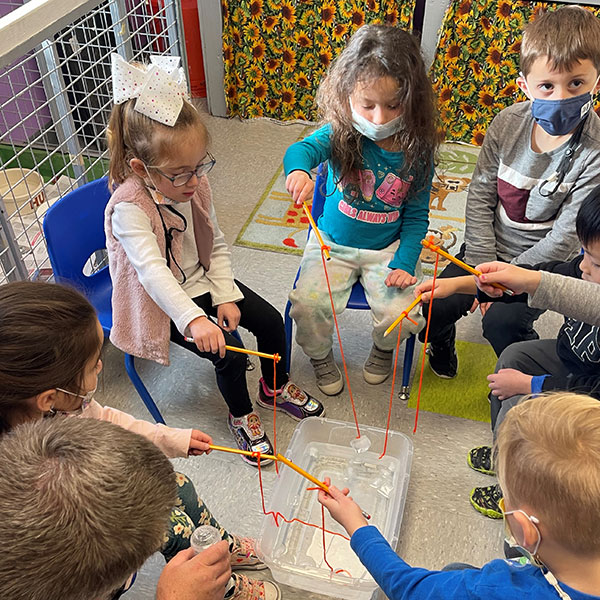
The day begins with 35 to 40 minutes of manipulative time, a time when the children’s small motor skills are strengthened to prepare them to use a pencil for writing. This is also when our math program is done. Some of the areas covered during the year in math are patterning, sorting, classifying, one to one correspondence, adding and subtracting, and graphing. All math exercises are done using the “hands on” method approach: using manipulatives and games with which the children are familiar.
Our pre-reading skills are also done every day. This area covers auditory discrimination, oral dictation, instructional language, listening comprehension, and letter recognition.
The children are evaluated during the second month of school. This information is shared during the first Parent-Teacher Conference so that both parent and teacher can work together.
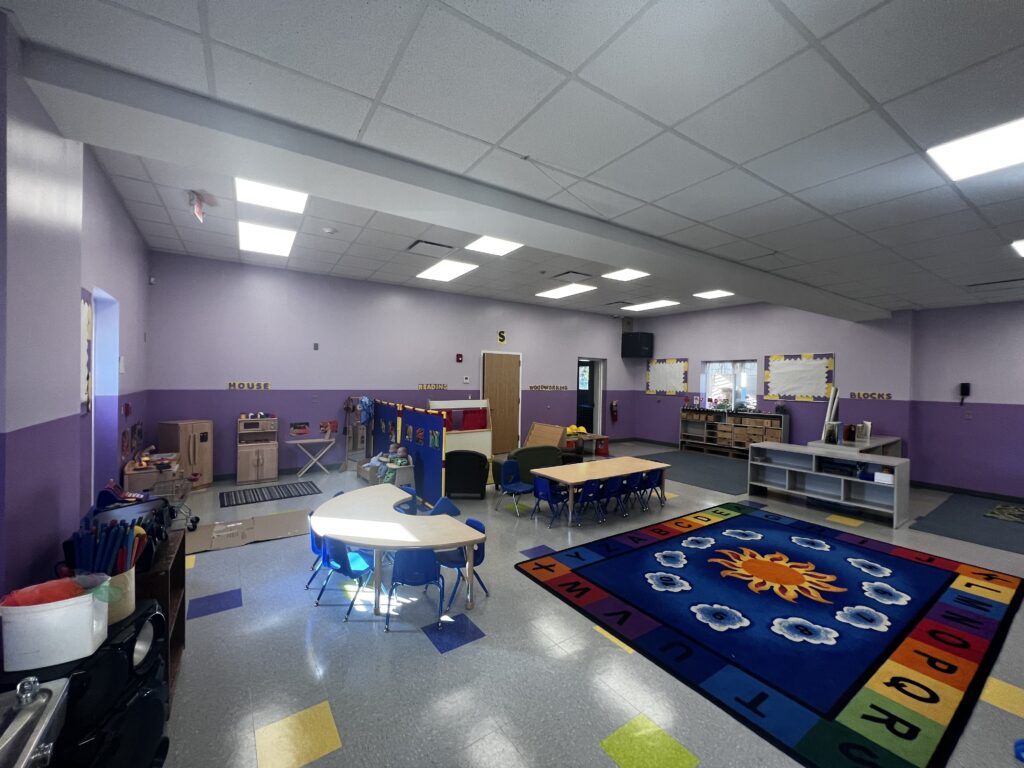
After manipulative time, a discussion takes place on the theme and activities they are covering. After morning snack, the children select the “learning center” in which they wish to participate. The unique aspect of this classroom is that all five learning centers are open and headed by a teacher or an assistant. The ratio in each area is a maximum 7 to I – one teacher to seven children. Areas covered are:
- Language arts – Children gather around the teacher sitting on comfortable rugs and listen to stories and do story dictation.
- Family Living Center – Children play house and depending on the “theme” it could become a grocery store with a cash register and “money,” or a hospital, or firehouse, etc. They also practice their phone numbers, address, buttoning, and zippering. We also do real cooking with the children. They wash up, wear aprons, follow directions, measure, pour, and cook. They learn good health habits, and math skills, see how a liquid becomes a solid, and, of course, they love to eat the finished product.
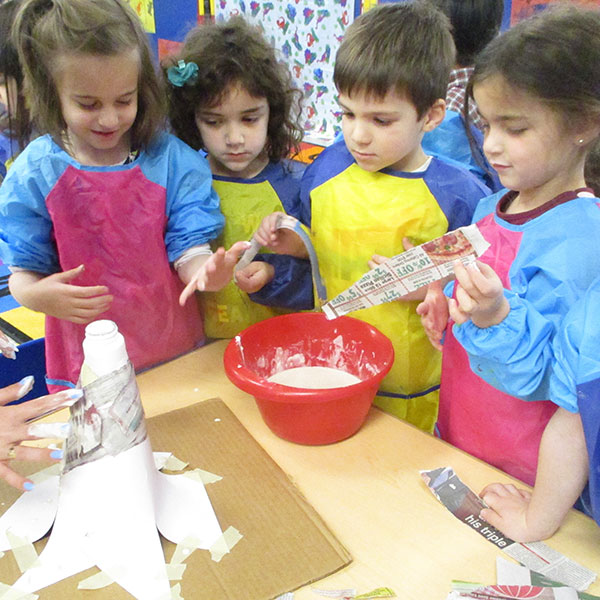
- Art Center – Children can be found cutting, pasting, and following directions. At the easel, children do free art and make their own creations. Work done by the children is always their own work. It is the process not the product that counts. They do their own cutting, pasting, etc. and all are “Hands On” activities.
- Science – Science is an important part of our program. One can see children experimenting with magnets, colored panels, rocks, leaves, seeds, dirt and using magnifying glasses, etc. The center has many classroom pets that the children care for, such as fish, birds, turtles, rabbits, and guinea pigs. They see the stages of a butterfly, which changes from a caterpillar to a chrysalis and then into a beautiful butterfly.
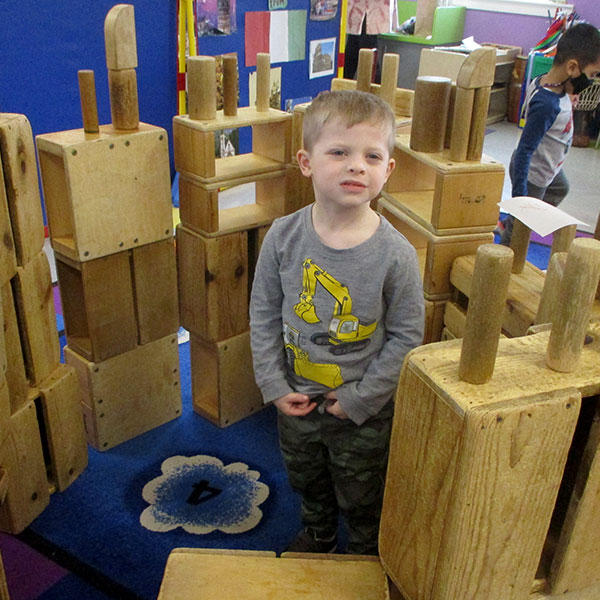
- Block Building – In “block building” the children learn many math skills and are introduced to many unusual new shapes. There are many accessories available to accompany the children’s creative structures such as rulers, clamps, animals, cars, people, and tubes.
- Woodworking – In this area the children can be seen hammering with real hammers and nails. They begin with large tree trunks. They learn to measure, use a saw, and create their own projects. The children wear goggles and there is a teacher for every four children in this area.
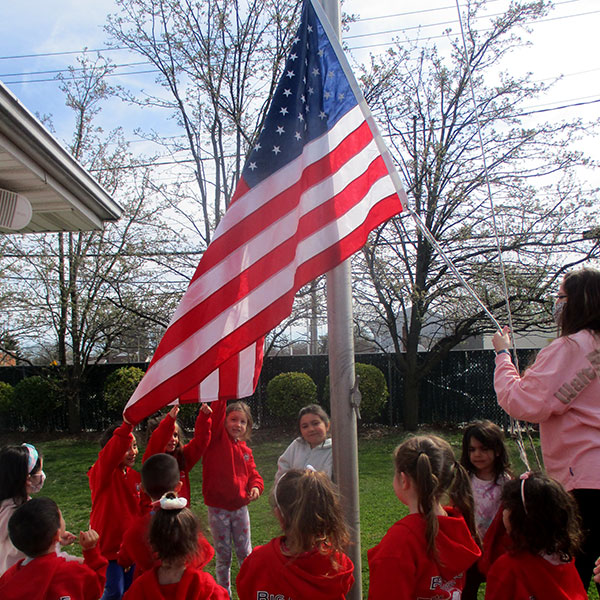
- Physical Development – We have acres of property and seven playgrounds. The children go outdoors everyday (weather permitting) to develop their large muscles. They run, jump, and climb, and take in all that good fresh air. This is a very important part of their development.
- Music – Children also enjoy music, play rhythm instruments, learn many songs, and “move” to the music. They also listen and follow directions.
We feel that developing the “whole child” is important for their future success.
Children who go through our pre-k program are well prepared for kindergarten.
Food at Big Chief – Parents have the option of sending in lunch or buying school lunch. 9:00 am- 12:00 pm students do not eat lunch at school. Parents provide fruit (no pouches) daily. Full day students (9:00-4:00) bring in 2 fruits, half day students (9:00- 12:00) bring in one fruit, ¾ day students (9:00-2:00) or (11:00-4:00) bring in one fruit. Filtered water is provided by the school or parents can send water in. No water bottles. Every Friday is pizza day delivered by a local Pizzeria along with garlic knots. If you would like that your child, please email the office (price to be determined)
SESSIONS AVAILABLE
You have many choices to choose from full days 9-4, ½ day 9:00-12:00, ¾ day 9:00-2:00 or 11:00-4:00. We also offer extended hours. Please see our registration form for prices or call our office and we will be glad to help you.
How to Register
Registration: To enroll your child, fill out our registration form, sign both the front and back & enclose a $350 registration fee. This ensures your child’s placement. This registration fee is non-refundable
Tuition Payments: Tuition is based on an annual fee. There are three ways you may pay. Plan one- you may pay your contract in full, plan two- you may pay half now and half in January, plan three is divided into ten equal payments for your convenience. Payments are due on the 1st of each month. Because you are paying tuition on a monthly basis, this tuition may go up any time, if deemed necessary. Please note that you are paying only for the days that school is in session and not for the days we are closed on our calendar (current year).
Your first payment is called security which is non-refundable and must be paid by August 1st. It will be applied as your tenth payment. If you have paid security and decide not to send your child to school and you inform us by August 15th, your security minus your $350 registration fee will be refunded to you. Your second payment will be due on September 1st. you may pay your tuition by check, made payable to Big Chief School.
There is a $25.00 late charge if tuition is paid after the 10th of the month. If a check is returned to us by the bank, you will be responsible for a $25.00 charge. We will redeposit one check. If any other payments are returned to us by the bank. You will be required to pay by a bank check for another future payments.